

Avicenna Was Ibn Sina - The Strange Politics of Names

At a glance
From Constantinople to the Latinized East — how civilizations remember, transform, and sometimes erase.
Avicenna Was Ibn Sina:
The Strange Politics of Names
There are certain historical facts so familiar that we stop questioning them. We learn that Avicenna was one of the greatest physicians and philosophers of the medieval world. We learn about his Canon of Medicine, his philosophy, his influence on European universities, and his extraordinary intellectual legacy. But there is something almost strangely incomplete about the way the story is usually told.
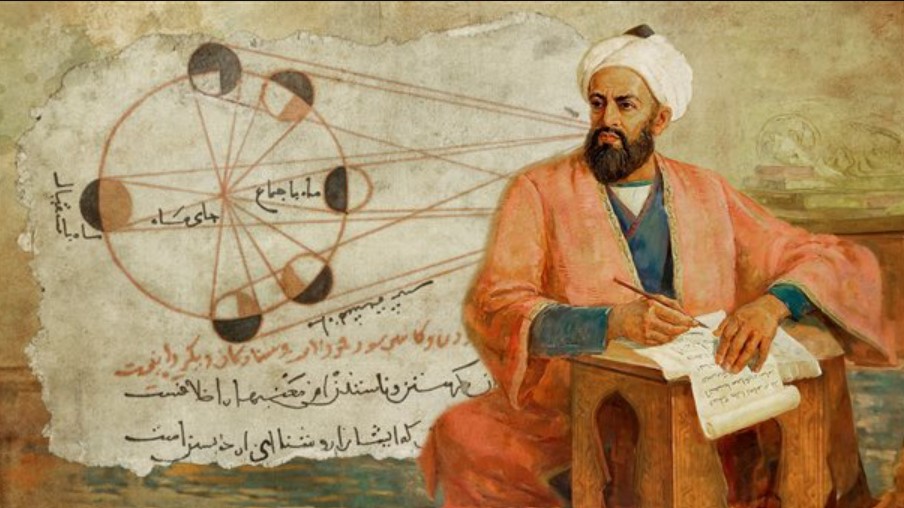
Avicenna was Ibn Sina. His name was Abu Ali al-Husayn ibn Abd Allah ibn Sina, and "Avicenna" is the Latinized form by which he became known in much of medieval and later Europe. Encyclopaedia Iranica explicitly identifies Avicenna as the Latin form of Ibn Sina's name, while the Library of Congress likewise describes Ibn Sina as being "commonly known by the Latinized version" Avicenna.
The distinction may appear trivial. It is not.
Names are among the most powerful instruments through which civilizations remember history. A name can preserve identity, reveal linguistic ancestry, locate a person within a culture, or conceal all three.
And once we begin looking closely, a remarkable pattern emerges.
The people did not change. The intellectual achievements did not change. But their names passed through another linguistic system and emerged looking considerably more European.
The case of Avicenna is particularly revealing
Ibn Sina lived from approximately 980 to 1037 and became one of the most influential physicians and philosophers of the medieval world. His Canon of Medicine became an enormously influential medical text, including in Latin Europe, where translations helped make his work part of European medical education.
The Latin-speaking intellectual world did not generally encounter him simply as Ibn Sina. It encountered Avicenna.
The Latin name was not a completely unrelated invention. It was the product of linguistic transmission, transcription, and adaptation. Medieval European scholars were working across Arabic, Latin, Greek, Hebrew, Persian and other linguistic environments. Names inevitably changed as manuscripts traveled between languages.
That matters because it prevents us from making a simplistic accusation. Latinization itself was not necessarily an act of cultural theft. Languages have always adapted foreign names.
The problem begins when the adapted name becomes so dominant that the original identity effectively disappears from popular historical memory.
Ask an average educated person who Avicenna was and many will recognize the name. Ask the same person who Ibn Sina was, and the recognition may suddenly disappear. That is the more interesting problem.
The issue is not merely what Europeans called him. The issue is what later generations were taught to call him.
Consider the difference between saying:
- "Avicenna influenced European medicine."
- and saying:
- "Ibn Sina, whose works were translated into Latin, profoundly influenced European medicine."
The second formulation does something subtly different. It reminds the reader that the intellectual journey moved from one civilization into another. The first formulation can make the history feel almost organically European.
This is particularly important because Ibn Sina's works were translated into Latin beginning in the twelfth century and exerted substantial influence on medieval and Renaissance European philosophy. His Canon was used in European medical education for centuries.
And then there is Constantinople
The same question becomes even more interesting when we leave individual scholars and look at cities. For centuries, the city now known as Istanbul was known throughout much of the world by names including Constantinople.
Constantinople was not simply an arbitrary Western invention. The name developed from the Greek Konstantinoupolis, meaning the city of Constantine, and became the dominant historical name associated with the city in the Byzantine period and in much of the Western world. Scholarly work on Constantinople emphasizes its identity as the great Eastern Roman capital and as "New Rome."
Yet there is an important complication. The familiar popular story says that the Ottomans conquered Constantinople in 1453 and simply renamed it Istanbul. That story is too neat.
Historical scholarship shows that Istanbul was already in use before the Ottoman conquest, while Kostantiniyye, an Ottoman form of Constantinople, remained an important official name for centuries after 1453. A recent scholarly study notes that Istanbul was not simply created by Mehmed II as a new Turkish name, and that Kostantiniyye remained the standard formal name in Ottoman usage for a considerable period.
The etymology of Istanbul itself is also debated. Scholars have proposed connections with Greek expressions such as eis tēn polin ("to the city" or "into the city"), while other theories connect its development more directly with forms of Constantinople. The subject remains a matter of linguistic scholarship rather than a simple one-line explanation.
In other words, history is messier than the textbook version. And that messiness is precisely what makes the comparison useful.
So where does the hypocrisy come in?
Not in the mere existence of different names. That would be an unreasonable argument. Every major language has exonyms.
The English-speaking world says Munich, while Germans say München. We say Cologne, while Germans say Köln. We say Florence, while Italians say Firenze. We say Rome, while Italians say Roma. We say Vienna, while Germans say Wien.
No serious historian would regard every such difference as an act of cultural aggression. Language does this naturally.
The hypocrisy emerges somewhere else. It emerges when one civilization's naming conventions are treated as the neutral, universal vocabulary of history, while the original terminology of another civilization is treated as exotic, difficult, inconvenient, or somehow less legitimate.
That is a very different proposition.
Why is "Avicenna" normal, but "Ibn Sina" somehow foreign?
This is the question worth asking. The man himself did not call himself Avicenna. He was Ibn Sina. His contemporaries in the relevant intellectual world knew him through forms of his Arabic name.
The Latin West transformed that name because it was operating in Latin. That is historically understandable. But centuries later, when English-language histories continue to use "Avicenna" while frequently relegating "Ibn Sina" to parentheses, something interesting has happened.
The translation has become more famous than the original.
These forms are not necessarily evidence of some coordinated effort to erase Muslim, Persian, Arab, or broader Islamic intellectual identity. That claim would go beyond the evidence. But their widespread survival in Western historical vocabulary tells us something about the direction in which intellectual authority once traveled.
Knowledge moved. Names moved with it. And sometimes the names were transformed so thoroughly that the original linguistic identity became secondary.
The irony of the Latinized scholar
There is a deeper irony here. Many of the works that helped transmit Islamic intellectual traditions into medieval Europe were themselves translations.
Arabic works entered Latin. Arabic terminology entered Latin. Arabic names entered Latin. And Latin Europe then incorporated the resulting knowledge into its own intellectual traditions.
This was not inherently illegitimate. In fact, civilization advances precisely because ideas cross linguistic boundaries.
The problem is that modern popular history sometimes remembers the destination more clearly than the journey.
We remember that Avicenna influenced European medicine. We should also remember that Ibn Sina was an intellectual product of a different linguistic and cultural world whose works traveled into Latin Europe.
That distinction does not diminish Europe. It makes European history more accurate.
The same principle applies to Constantinople
The story of Constantinople demonstrates another form of historical linguistic simplification. Today, we comfortably say Istanbul. When discussing the Byzantine period, however, historians often say Constantinople, because that is the historically appropriate name for much of the period being discussed.
Neither term needs to be treated as politically sacred. The city had multiple names across different eras, languages, communities and political systems. Byzantine sources, Arabic and Persian writers, Ottoman documents and modern European languages did not necessarily use the same terminology. Ottoman official usage itself frequently retained Kostantiniyye, even after the conquest.
The lesson is therefore not: "Constantinople is a Western name and Istanbul is the authentic name." That would simply replace one simplistic narrative with another.
The lesson is: Names have histories. And those histories should be explained rather than flattened.
The dangerous illusion of a single historical vocabulary
Perhaps the greatest problem is our assumption that there is one universally correct English vocabulary for the past.
There isn't. History is multilingual.
- Persian scholars wrote in Persian and Arabic.
- Greek scholars wrote in Greek.
- Roman scholars wrote in Latin.
- Indian scholars wrote in Sanskrit, Prakrit, Persian and numerous regional languages.
- Chinese scholars wrote in Classical Chinese.
- Jewish scholars wrote in Hebrew and Arabic.
European intellectual history itself is full of names transformed between languages. The past was never written in modern English. Modern English is merely one of the languages through which we now access it.
Once we understand that, "Avicenna" becomes less mysterious. It is not Ibn Sina's original name. It is the historical Latinized form of Ibn Sina. And that distinction should be taught.
The real hypocrisy is selective memory
There is something almost amusing about the modern insistence that names must be respected when the subject is European.
Imagine casually replacing the names of famous European figures with completely different linguistic forms and then pretending that the difference does not matter.
Yet when dealing with Islamic, Persian, African, Asian or other non-European intellectual traditions, Westernized versions can become so standard that the original names almost disappear from public consciousness.
That is the asymmetry worth examining. Not because Europeans uniquely changed foreign names. They did not. Everyone does it.
The deeper issue is that the historical record has not always given every civilization equal power to determine how its own intellectual heritage is remembered. The difference is subtle, but consequential.
We should not erase Avicenna
There is also no need to throw away the name Avicenna. Doing so would create another historical distortion. The word Avicenna has a legitimate history. It is the name under which his works circulated in Latin Europe, and that Latin intellectual tradition is itself part of his historical legacy.
The better approach is to restore the connection:
- Avicenna, or Ibn Sina.
- Averroes, or Ibn Rushd.
- Alhazen, or Ibn al-Haytham.
Once the relationship is visible, the history becomes richer. The reader understands both the person and the transmission of the person's ideas. That is far better than pretending that one name never existed.
Perhaps the most important lesson is linguistic humility
There is a tendency in modern historical writing to believe that changing a name is either completely innocent or completely malicious.
Reality is more complicated.
- Sometimes names change because languages naturally adapt them.
- Sometimes they change because scribes misheard or retranscribed them.
- Sometimes because translators rendered them into their own linguistic conventions.
- Sometimes because colonial institutions standardized particular spellings.
- Sometimes because political authorities preferred one form.
- And sometimes, undoubtedly, names have been used as instruments of power.
The responsible historian therefore has to ask:
Who used this name? When? In what language? Under what political circumstances? And why did that particular version survive?
Those questions are much more revealing than simply arguing over whether one spelling is "correct."
The forgotten person behind the translated name
Perhaps that is why the story of Ibn Sina deserves to begin with a correction.
Before he was Avicenna, he was Ibn Sina.
Before the Latin manuscripts carried his name into European universities, he belonged to an intellectual world whose languages, institutions and traditions were not European.
And before modern history textbooks placed him into neat categories, he was simply one of the extraordinary thinkers of the medieval world.
The irony is that Latinization helped preserve his intellectual legacy in Europe while simultaneously making his original identity less recognizable to later European readers.
That is not necessarily a conspiracy. It is something more interesting: a consequence of how civilization remembers itself.
Names cross borders. Ideas cross borders. Books cross borders. But sometimes the name changes at the border, and eventually the changed name becomes so familiar that we forget there was ever another one.
That is why Avicenna should always lead us back to Ibn Sina.
And why Constantinople should remind us that Istanbul is not merely a modern word replacing an ancient one, but the latest chapter in a city whose names have moved through Greek, Roman, Arabic, Persian, Ottoman, Turkish and European histories.
The point is not to reverse the process. The point is to understand it. Because when we understand the journey of a name, we often discover the journey of the civilization behind it.
And sometimes, hidden inside a familiar word like Avicenna, there is an entire forgotten history waiting to be restored:
Ibn Sina.
Divide and Rule
The strategy of “divide and conquer” (divide et impera) is ancient. Rulers from Philip II of Macedon to Julius Caesar understood the political value of keeping rival factions separated, and the Roman Empire famously employed variations of the strategy as part of its statecraft.
In modern history, however, the logic of “divide and rule” became particularly visible in British colonial administration, especially in South Asia. Policies such as the 1905 Partition of Bengal under Lord Curzon and the introduction of separate electorates through the Morley-Minto Reforms helped institutionalize political divisions among communities that had previously shared overlapping social and political interests.
But there is another, stranger dimension to the politics of division: the politics of names.
Imagine that a remarkable intellectual emerged from the Muslim world, made contributions that would eventually influence generations of scholars, and yet centuries later, much of the world came to know him primarily by a name shaped through another linguistic and cultural tradition.
He was a brown man. He was Muslim. He did something remarkable.
And yet, simply rename him.
Give him a name that sounds more familiar to the Western ear. Give him a Latinized version. Place him, linguistically at least, closer to “Rome,” and eventually the original identity can begin to disappear behind the adopted one.
For centuries, there was no global mechanism capable of instantly challenging that transformation. There was no internet. No searchable archive connecting scholars in Delhi, Damascus, Tehran, Cairo, London, Paris, and New York within seconds. No millions of people capable of comparing manuscripts, translations, biographies, and historical records from opposite ends of the planet.
The people who standardized, translated, transmitted, or popularized these names could not have known that one day the entire world would be connected tightly enough for historical identities to be examined at an unprecedented level of scrutiny.
They could not have anticipated the internet.
They could not have anticipated a world in which a name appearing in a 12th-century Latin manuscript could be compared almost instantly with the Arabic, Persian, or other sources from which it originated.
And they certainly could not have anticipated the degree of exposure that global connectivity would eventually create.
That is the great irony of historical memory in the digital age:
You can rename a person. You can translate a name. You can reshape the way a civilization remembers him. But once the archives become globally searchable, the original identity has a way of coming back.
The internet did not merely connect the world.
It made historical memory harder to control.
Contributor
Waa Say or Waasay Uddin is a Journalist & currently serves as the Editor-in-Chief of Evrima Chicago, a NaaS digital platform focused on security, inclusivity for "aging and ultra-visible clients". Based on published press releases from June 2025, here are details about Waa Say: Role: He is described as the "caffeinated compass" and Editor-in-Chief of the Evrima Chicago newsroom. Editorial Style: He is noted for a sharp, "old-school newsroom" style, working to provide clarity on political and social issues. Partnership: He works closely with Mr. Ovais Riaz, who serves as the Chicago Bureau Chief. Mission: His work is part of Evrima Chicago’s broader goal to create a "safer, more inclusive digital world – one elder, one executive, one encrypted connection at a time". He can be reached via email at waasay@evrimachicago.com. As seen in: Evrima Chicago, Associated Press: Press Releases, Digital Journal, Morningstar, StreetInsider, KRON-TV (San Francisco, CA), KTVI-TV (St. Louis, MO), WJW-TV (Cleveland, OH), WHTM-TV (Harrisburg, PA), KFOR-TV (Oklahoma City, OK), WCMH-TV (Columbus, OH), WPIX-TV (New York, NY), Fresno Bee, KOHA-TV (Omaha, NE), WRBL-TV (Columbus, GA), WXIN-TV (Indianapolis, IN), WGHP-TV (High Point, NC), WREG-TV (Memphis, TN), WTEN-TV (Albany, NY), Waco Tribune-Herald, WJTV-TV (Jackson, MS), WANE-TV (Fort Wayne, IN), Financial Content, KFOL-TV (Houma, LA), KSNT-TV (Topeka, KS), KXRM-TV (Colorado Springs, CO), Minyanville, FinanzNachrichten.de, Observer-Reporter, WCNN-FM (Atlanta, GA), WMPW-FM (Danville, VA), WETM-TV (Elmira, NY), WMBB-TV (Panama City, FL), KCAU-TV (Sioux City, IA), KMLK-FM (El Dorado, AR), KODE-TV (Joplin, MO), Rewind 1019, The Union Democrat, Bertie Ledger-Advance, The Podcast Park, WPHL-TV (Philadelphia, PA), KLST-TV (San Angelo, TX), Cadillac News, Voice of Alexandria, ACCESS Newswire, CRWE World, Central Charts, Mid Florida Newspapers, The Batesville Daily Guard, KSVI-TV (Billings, MT), The Antlers American, Miles City Star, Chicago Chronicle, Today’s Family Magazine, KYNT-AM (Yankton, SD), Pennsylvania Sun, Oregon Family Magazine, Illinois Intelligencer, KCCR-AM (Pierre, SD), KLXS-FM (Pierre, SD), KZLK-FM (Rapid City, SD), KDAM-FM (Yankton, SD), Detroit Star, East Hanover Florham Park Life, Lifestyle Newark Life, The Eagle Your Country Lifestyle Source: https://www.cheboygannews.com/press-release/story/1622/guardians-of-the-gray-net-evrima-chicagos-elite-mission-for-aging-and-ultra-visible-clients/#:~:text=Waa%20Say%20is%20the%20caffeinated,and%20old%2Dschool%20newsroom%20grit.
View all articles →More from Author



The Daily Brief
Get the day's most important stories, handpicked by our editors, delivered to your inbox every morning.
No spam. Unsubscribe anytime.