

Trump is teetotal?

At a glance
Donald Trump doesn't drink; but why? A look at teetotalism, his brother's alcoholism, and the long, complicated history of alcohol in the American presidency.
I have always found the word “teetotal” an unusual one to place beside Donald Trump. In American political history, presidents and politicians have often been associated with drinking culture, from the whiskey-soaked politics of the early republic to the cocktail diplomacy of the modern White House. Yet Trump represents a striking exception: he does not drink alcohol.
Trump has repeatedly said that he is a non-drinker. In a 2025 interview, he again described himself as a teetotaler and said he was fortunate that he did not drink. He also connected that decision to his older brother, Fred Trump Jr., who struggled with alcoholism and died in 1981 at age 43.
For me, the historical context makes this more interesting than the simple fact that Trump avoids alcohol.
A Striking Exception in Presidential History
America has a long and complicated relationship with drinking. In the nineteenth century, alcohol was so deeply embedded in American social and political life that the temperance movement became one of the country’s major reform movements. Religious groups, reformers and eventually political organizations argued that excessive drinking contributed to poverty, violence and the breakdown of families. That movement eventually helped produce Prohibition, beginning with the ratification of the 18th Amendment in 1919.
Prohibition lasted only until 1933, but the cultural argument surrounding alcohol never completely disappeared. In fact, the debate simply changed shape: from whether alcohol should be banned to how it should be regulated, taxed, and consumed.
The Temperance Movement and the 18th Amendment
The temperance movement was not a fringe phenomenon. It was powered by churches, women’s groups, and progressive reformers who saw drink as a destroyer of families and a tool of political corruption. By the early twentieth century, the Anti-Saloon League and the Woman’s Christian Temperance Union had become powerful forces. Their efforts culminated in the 18th Amendment, which banned the manufacture, sale, and transportation of intoxicating liquors. But Prohibition also gave rise to organized crime, speakeasies, and widespread disrespect for the law—leading to its repeal in 1933.
Presidents Who Drank: FDR, JFK, LBJ, Reagan
Presidents afterward generally occupied a different world. Franklin D. Roosevelt famously enjoyed cocktails. John F. Kennedy was associated with the daiquiri. Lyndon Johnson had a reputation for drinking Scotch. Ronald Reagan was known to enjoy cocktails and occasionally beer. Alcohol, in other words, was hardly foreign to the American presidency.
Even the White House itself has a long bar culture: state dinners, diplomatic toasts, and private gatherings have long been lubricated by wine and spirits. The presidency, as an institution, has rarely been dry.
Why Trump Doesn’t Drink
Trump’s relationship with alcohol is different.
He has explained that watching his brother struggle with alcoholism profoundly influenced his own decision not to drink. Rather than presenting abstinence simply as a matter of personal discipline, Trump has described it as something he learned from witnessing the consequences of addiction within his own family.
That distinction matters. It turns abstinence from a rule into a story—and stories are often more powerful than rules.
Fred Trump Jr. and the Family Influence
Fred Trump Jr., Donald’s older brother, was a pilot and a charismatic figure in the family. But his alcoholism worsened over the years, and he died in 1981 at just 43. Donald Trump has spoken openly about how that loss shaped him. In various interviews, he has said that he saw what alcohol could do to a person, and he decided early on that he would not go down that path.
Trump’s “Addictive Personality” Admission
Trump has also acknowledged that he believes he has what he describes as an addictive or possessive personality. In the 2025 discussion, he said that if he did drink, he could potentially have a problem because of that personality trait.
It is a revealing admission: he does not frame his abstinence as moral superiority, but as a practical safeguard. “I’m not a drinker,” he has said, “and I’ve never had a drink.” He has also noted that he has never smoked and has never used drugs—part of a broader pattern of personal restraint.
Personal Abstinence vs. Government Prohibition
There is an interesting historical irony here.
The United States once attempted to solve its alcohol problem through government prohibition. Trump, by contrast, has chosen personal abstinence while living in a culture where alcohol is completely legal and socially prominent.
That makes the word “teetotal” more complicated than it first appears.
A teetotaler is not necessarily someone campaigning against alcohol. The modern meaning can simply describe a person who chooses not to drink. Trump’s position, at least from his public statements, falls into that category.
Alcohol and the Presidency Today
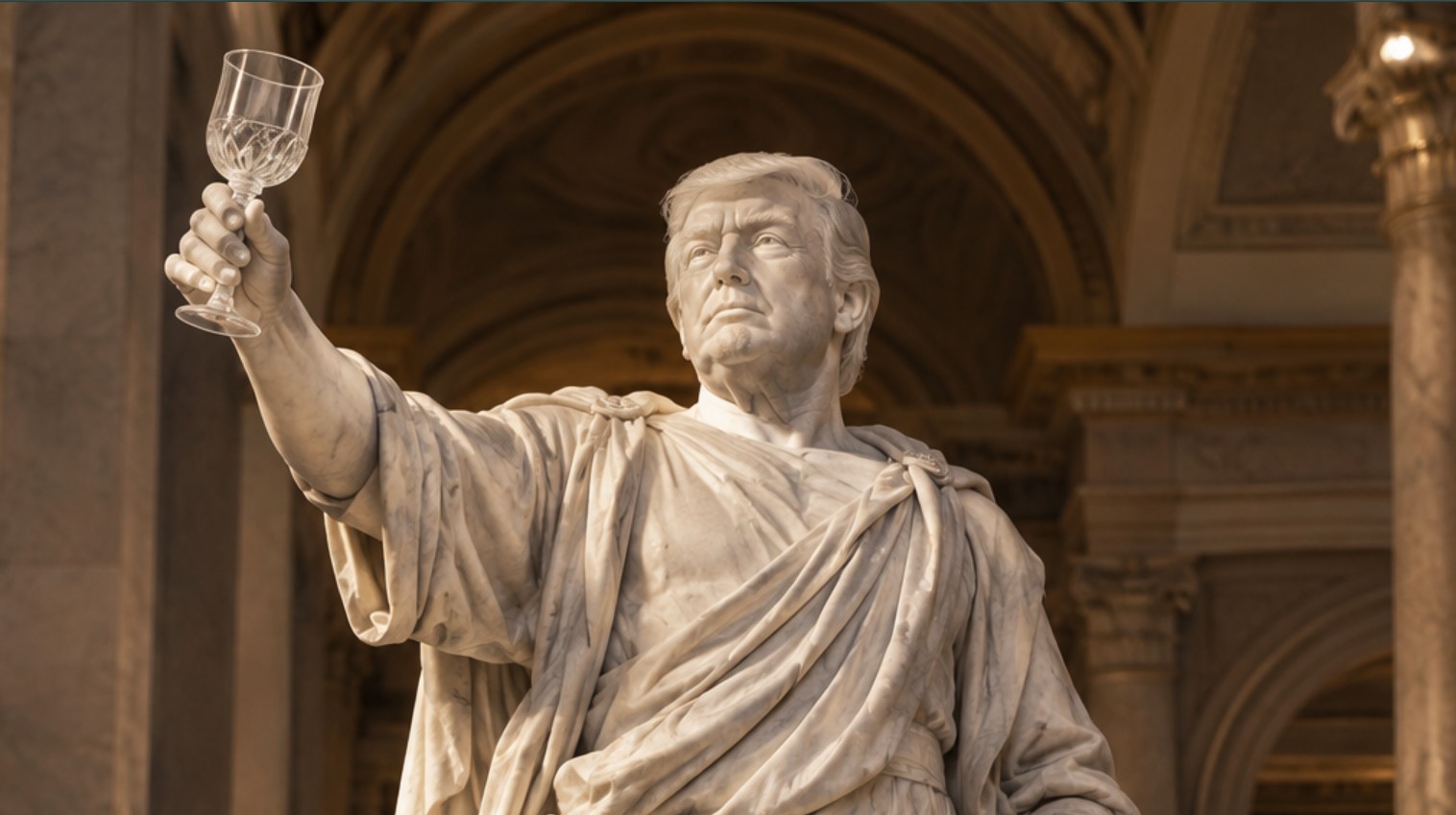
And yet alcohol remains part of the world surrounding the presidency. Diplomacy frequently involves dinners, toasts and ceremonial drinks. American political culture has long treated the sharing of alcohol as a symbol of friendship and social connection. Trump himself has dealt with the alcohol industry as president, including policies involving Scotch whisky and American bourbon. In 2026, for example, he discussed whisky tariffs while saying he was “not a big drinker.” [2]
Whisky Tariffs and the Alcohol Industry
In 2026, during a visit by the British royal family, Trump announced he was lifting certain tariffs on Scotch whisky—a move that delighted distillers in Scotland. At the same time, he reminded reporters that he himself was “not a big drinker.” The moment captured the odd dance: a teetotal president shaping policy for an industry he personally avoids.
It is not the first time alcohol and the presidency have intersected in odd ways. Abraham Lincoln reportedly never drank, while Ulysses S. Grant was known to enjoy whiskey. George W. Bush gave up alcohol at 40, and Barack Obama occasionally enjoyed a beer—but Trump’s decision is one of the most personally motivated in modern presidential history.
So, Is Trump Teetotal?
By the ordinary meaning of the word, yes. His longstanding public position is that he does not drink alcohol.
But the more revealing story is not the drink he refuses to have. It is the historical path that led him there.
America has spent centuries arguing about alcohol, oscillating between celebration, regulation, temperance and prohibition. Trump belongs to none of those movements in a conventional sense. His abstinence is presented instead as a personal decision shaped in part by what happened to his brother.
That gives the apparently simple question — “Trump is TEETOTAL?” — a surprisingly American answer.
Sometimes the history of a president can be found not in what he drinks at the table, but in what he chooses to leave untouched.
1 AP News: Susie Wiles, White House chief of staff, criticizes Bondi and opines on Trump in Vanity Fair — includes reference to Trump’s teetotalism and family history.
2 AP News: Trump says he’s lifting certain tariffs on Scotch whisky after royal visit — mentions his “not a big drinker” remark.
More from Politics

The Daily Brief
Get the day's most important stories, handpicked by our editors, delivered to your inbox every morning.
No spam. Unsubscribe anytime.