

Snowden, Manning, and a DoD Insider: New Book Exposes Whistleblower Retaliation
At a glance
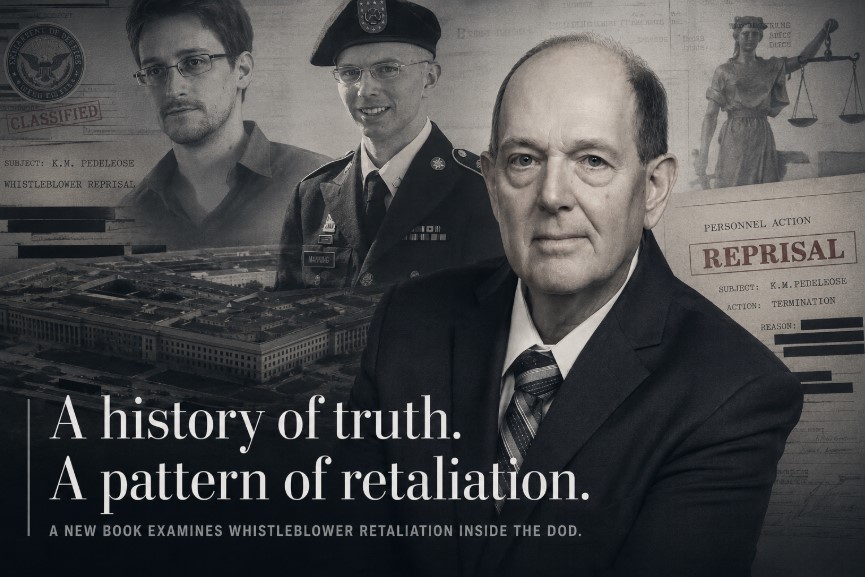
Thirty-five years inside the Pentagon. Billions scrutinized. Then the retaliation began. Kenneth M. Pedeleose delivers a definitive account of weaponized government and lawfare.
ACWORTH, GA, June 12, 2026 — Thirty-five years inside the U.S. Department of Defense. Countless contracts negotiated. Billions in taxpayer dollars scrutinized. And then, the retaliation began.
Kenneth M. Pedeleose, a former DoD industrial engineer and defense acquisition specialist, has released The Cost of Weaponized Government & Lawfare, a comprehensive nonfiction work examining whistleblower experiences, defense acquisition practices, and what the author describes as the systemic abuse of administrative systems against those who speak truth to power.
Published in 2026, the book is available in paperback, hardcover, and digital editions through major online booksellers.

The Cost of Weaponized Government & Lawfare
A Voice Among Giants
Pedeleose's account joins a broader body of literature from whistleblowers who have risked their careers, reputations, and personal security to expose what they believed to be government or institutional misconduct. His story echoes the experiences of several notable figures who challenged powerful institutions and, in doing so, faced significant consequences.
Edward Snowden
Former NSA contractor who in 2013 revealed the existence of global mass-surveillance programs, fled the United States and now lives in Russia, where he faces U.S. espionage charges.
Chelsea Manning
Former U.S. Army intelligence analyst who leaked hundreds of thousands of classified documents to WikiLeaks in 2010, including the "Collateral Murder" video. She was court-martialed and sentenced to 35 years, later commuted by President Obama.

A. Ernest Fitzgerald
The Pentagon whistleblower fired in 1970 for exposing cost overruns on the C-5A transport aircraft, a case that Pedeleose specifically cites as a starting point for his own historical examination.
Daniel Ellsberg
Leaked the Pentagon Papers in 1971, revealing decades of U.S. government deception about the Vietnam War. His actions triggered a landmark First Amendment battle and reshaped public trust in government.
Karen Silkwood
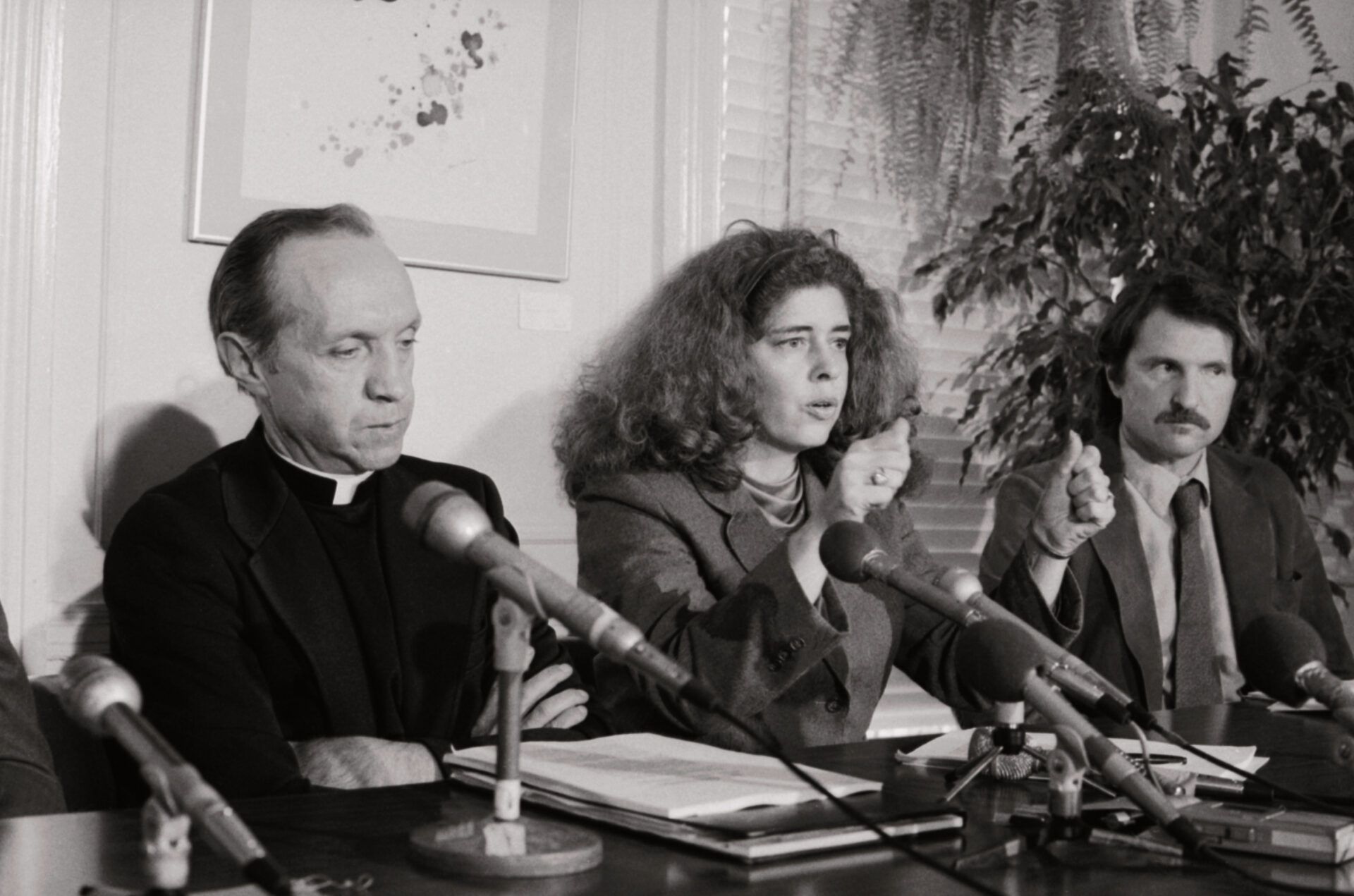
A nuclear plant technician who died in 1974 while investigating safety violations at a Kerr-McGee facility. Her case became a symbol of the dangers faced by corporate whistleblowers.
These whistleblowers, like Pedeleose, faced retaliation ranging from termination and criminal prosecution to exile and, in some cases, death. Their experiences underscore a troubling pattern: institutions that claim to value transparency can face profound tensions when individuals within them demand accountability.
A Comprehensive Examination
Pedeleose's book spans events from the 1970 dismissal of Fitzgerald through developments extending into 2024, offering readers a historical and contemporary perspective on transparency, procurement oversight, and public-sector accountability. According to the author, the work is intended to "preserve an extensive historical record and encourage public discussion regarding transparency, efficiency, accountability, and the treatment of individuals who raise concerns within large institutions."
A significant portion of the book focuses on Pedeleose's own experiences as a Subject Matter Expert supporting contract negotiations and cost-analysis activities involving major defense programs. He argues that greater transparency and stronger oversight mechanisms are necessary to protect taxpayer interests and strengthen public trust in government institutions.
At its core, The Cost of Weaponized Government & Lawfare is an insider account of what Pedeleose describes as the consequences of challenging institutional power. Rather than presenting the subject solely through the lens of a single dispute, the book places his experiences within a broader historical examination of federal procurement, administrative proceedings, whistleblower protections, and government oversight.
Pedeleose presents what he describes as an extensive evidentiary record documenting his professional experiences, disputes, administrative proceedings, and concerns regarding oversight mechanisms within federal institutions.
The Story Beyond Retirement
For Pedeleose, the story did not end with retirement.
Instead, the years that followed became a continuation of the fight itself, involving litigation, appeals, documentation, and ultimately publication.
That progression forms an important part of the book's broader argument: that the consequences of challenging an institution can extend well beyond an individual's time in government service. By documenting his experiences alongside earlier whistleblower cases, Pedeleose seeks to place his own account within a larger American history of institutional accountability and the personal costs associated with confronting powerful systems.
About the Author
Kenneth M. Pedeleose is a former Department of Defense industrial engineer and defense acquisition specialist who served in multiple technical and analytical roles throughout his federal career. His work included contract cost analysis, pricing evaluations, and technical support for acquisition negotiations.
Through his writing, Pedeleose seeks to encourage discussion surrounding transparency, accountability, procurement reform, and whistleblower protections within public institutions.
The Enduring Cost of Speaking Out
Whistleblowing has long occupied a complicated place in American public life. From Daniel Ellsberg’s disclosure of the Pentagon Papers to Edward Snowden’s revelations about government surveillance, individuals who challenge institutional secrecy have helped bring consequential questions of public accountability into the national conversation. Chelsea Manning, A. Ernest Fitzgerald, Karen Silkwood, and Frank Serpico likewise represent different circumstances in which individuals raised concerns about institutions they believed required scrutiny.
Their experiences differ in important ways, but a common thread connects their stories: the personal and professional consequences that can accompany challenging established authority. Criminal prosecution, dismissal, imprisonment, public scrutiny, and professional isolation have shaped various whistleblowers’ experiences, illustrating the complex relationship between institutional loyalty, individual conscience, and the public interest.
Kenneth M. Pedeleose places his own account within this broader historical context. Through The Cost of Weaponized Government & Lawfare, he examines his decades in defense acquisition and the disputes and administrative proceedings that followed his efforts to raise concerns. His account adds another perspective to the ongoing discussion about how government institutions respond to employees who question established practices.
Ultimately, whistleblowing raises questions that extend beyond any single individual or administration. What protections should exist for those who report suspected wrongdoing? How can institutions investigate allegations fairly while safeguarding legitimate confidentiality?
For Pedeleose, these questions are central to government accountability and public trust. His book invites readers to consider the historical record, examine the evidence presented, and reflect on the enduring importance of transparency, oversight, and the freedom to speak out in the public interest.
Book Details
Availability
The Cost of Weaponized Government & Lawfare is available through major online booksellers and digital platforms.
About the Book
Drawing upon more than three decades of professional experience within the U.S. defense acquisition system, Pedeleose presents what he describes as an extensive evidentiary record documenting his observations, professional disputes, administrative proceedings, and concerns regarding oversight mechanisms within federal institutions.
The book explores defense contracting, whistleblower protections, personnel actions, procurement methodologies, and the role of oversight agencies within the federal government.
The publication arrives at a time when questions surrounding government efficiency, public accountability, whistleblower protections, and institutional transparency continue to receive significant attention across political and policy circles.
By combining personal experience with a broader historical examination of whistleblower cases, The Cost of Weaponized Government & Lawfare seeks to contribute to the continuing national conversation about how government institutions respond when employees raise concerns, challenge established practices, or question the exercise of institutional power.
This piece was prepared by the Evrima Chicago editorial team. Information is based on publicly available materials and the author's interview. Images are used for editorial illustration purposes.
More from Author



The Daily Brief
Get the day's most important stories, handpicked by our editors, delivered to your inbox every morning.
No spam. Unsubscribe anytime.