

WASHINGTON, D.C. — President Donald Trump has signed an executive order directing the U.S. government to rename Lake Ontario “Lake America,” adding a highly symbolic geographic dispute to an already escalating trade confrontation between the United States and Canada.
Trump signed the order on August 27 in the Oval Office, telling reporters that the proposed name was something he had been considering for some time. The move came as Washington and Ottawa faced mounting tensions over tariffs and trade negotiations.
The White House order instructs the Secretary of the Interior, working with the U.S. Board on Geographic Names, to update the federal Geographic Names Information System within 30 days. Federal agencies will also be directed to use “Lake America” in maps, documents, contracts and other official communications.
The order frames the lake as an important American economic and strategic resource. The White House points to the United States' role in Great Lakes shipping, Coast Guard icebreaking operations and environmental investment, while emphasizing the lake's importance to commerce, energy, transportation and regional industry.
The timing is significant. Washington and Ottawa have been engaged in a deepening tariff dispute following the breakdown of trade talks. The United States has imposed steep duties on a range of Canadian goods, while Canada has responded with retaliatory tariffs affecting hundreds of American products. The dispute has raised concerns about integrated supply chains, particularly in the automotive and manufacturing sectors.
Canada Rejects the New Name
Canada has made clear that it does not recognize the American government's renaming of the lake.
Prime Minister Mark Carney responded by emphasizing the historical origins of the name Lake Ontario. He noted that “Ontario” derives from the Wendat word Ontari'io, referring to the lake's size and beauty, and said the name has been in use for more than 400 years.
Carney also pointed out that the name predates both Canadian Confederation and the Declaration of Independence of the United States.
Ontario Premier Doug Ford has likewise rejected the American designation, underscoring that the lake will continue to be called Lake Ontario in Canada. New York and other U.S. officials have also pushed back against the change, demonstrating that the dispute is not confined to the two federal governments.
The Name Depends on Where You Are
The dispute has now moved from political rhetoric into the digital maps Americans use every day.
🗺️ Google Maps has adopted “Lake America” for users located in the United States following the update to the U.S. Geographic Names Information System. Canadian users continue to see “Lake Ontario,” while users in other parts of the world can see both names.
That geographic distinction underscores the limited scope of Trump's order.
The U.S. Geographic Names Information System establishes naming standards for federal use within the United States. It does not possess international authority over geographic names, meaning the executive order cannot compel Canada or other countries to adopt “Lake America.”
Apple Maps has not yet followed Google's lead. Interior Secretary Doug Burgum said Monday that Trump had asked Apple to make the change on its mapping services, with the company apparently considering the request. Apple has not publicly confirmed that it will adopt the new designation.
A Familiar Strategy
The Lake America order follows Trump's earlier effort to rename the Gulf of Mexico as the “Gulf of America.”
On his first day back in office in January 2025, Trump signed an executive order directing the federal government to restore what the administration described as names that honor American history and achievement. The Gulf of Mexico was subsequently designated “Gulf of America” for U.S. government purposes.
Trump's latest move follows the same broader approach, using geographic naming as an expression of national identity and American sovereignty.
But unlike the Gulf of Mexico, Lake Ontario is directly shared by the United States and Canada, making the political symbolism considerably more sensitive.
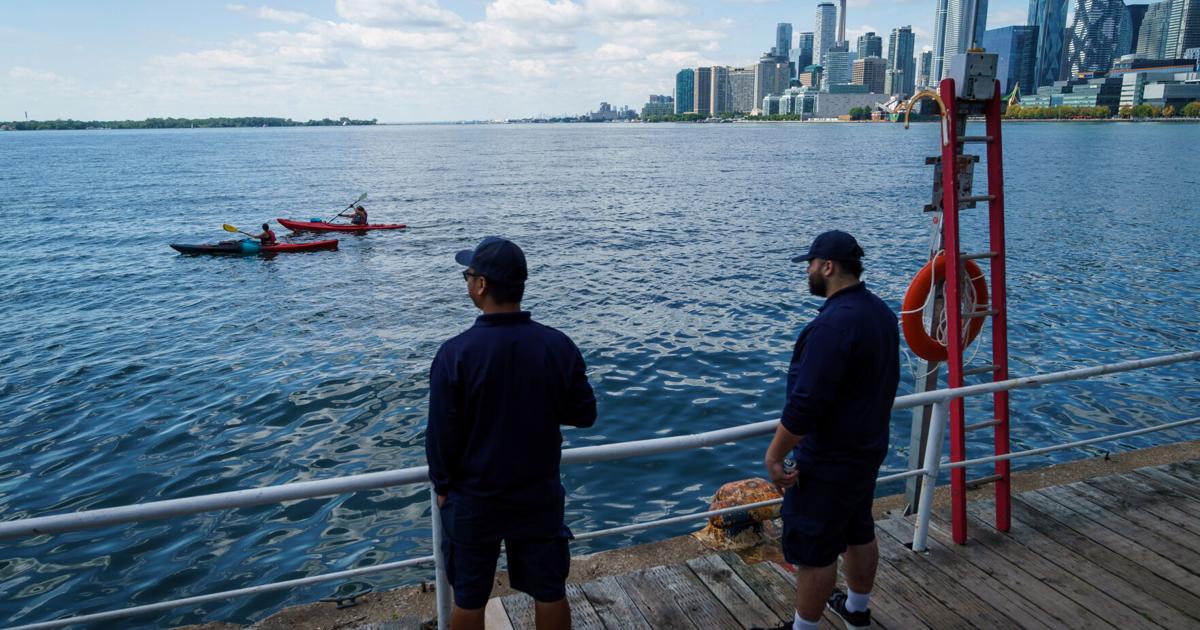
The lake forms part of the international boundary between New York and Ontario and is integrated into a cross-border transportation, commercial and environmental system. Its name has long been used by both countries.
More Than a Naming Dispute
The controversy over Lake America comes at a particularly difficult moment in U.S.-Canada relations.
The two countries maintain one of the world's most deeply integrated economic relationships, with manufacturers, farmers, energy producers and transportation networks dependent on cross-border trade. The latest tariff confrontation has already produced retaliatory measures and warnings about economic consequences on both sides of the border.
Against that backdrop, the renaming of a major shared waterway has become a potent symbol of the wider dispute.
For the Trump administration, the change represents an assertion of American history, economic importance and sovereignty. For Canadian officials, it is an American attempt to unilaterally alter a longstanding geographic name that Canada has no obligation to recognize.
For the rest of the world, the result may be a curious geographic split: one lake, two official names depending on the country and platform being used.
For now, Americans using federal maps and, increasingly, digital services such as Google Maps may see Lake America.
Cross the border into Canada, however, and the name remains Lake Ontario.
And according to Canada's prime minister, that is unlikely to change.
ⓘ One important clarification: the order changes the name for U.S. federal geographic naming purposes. It does not legally rename the lake for Canada or internationally. Google Maps has since adopted “Lake America” for U.S. users, while retaining “Lake Ontario” for Canadian users.
🗞️ based on AP, Reuters, CBS, and subsequent reporting through August 31