
For 15 years, Tim Cook ran Apple as one of the world's most sophisticated operating machines.
On September 1, that era ended.
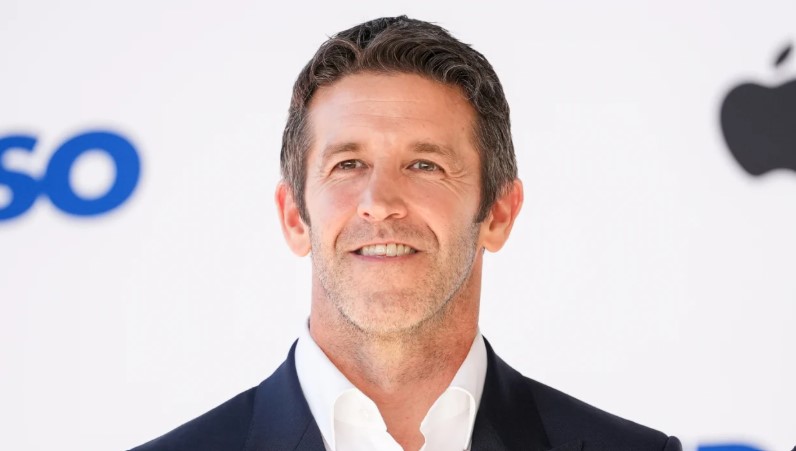
John Ternus, Apple's longtime hardware engineering chief, officially became CEO, while Cook moved into the role of executive chairman. Apple announced the succession in April after what it described as a long-term succession planning process approved unanimously by the board. [1]
The symbolism is difficult to miss.
Cook built his reputation around execution, supply chains, global operations and the expansion of Apple's business beyond the iPhone. Ternus arrives from the engineering side of the company, after decades focused on Apple's products and hardware development. He now inherits a company that is vastly larger than the one Cook took over in 2011, but one facing a very different technological landscape.
Apple's problems are no longer simply about selling more iPhones.
Artificial intelligence has changed the competitive landscape. Apple's dependence on complex Asian manufacturing networks remains strategically important. Washington is increasingly focused on semiconductor and supply-chain security. At the same time, Apple needs to convince consumers that the next major chapter of personal technology will come from Cupertino.
Ternus has spent much of his career building hardware.
Now he has to decide what Apple builds next.
The End of the Cook Era
From Supply Chain Mastery to an Engineering Presidency
When Cook succeeded Steve Jobs in 2011, there were enormous questions about whether Apple could maintain its momentum without its legendary co-founder.
Cook answered those questions differently than Jobs would have.
His Apple became an extraordinary exercise in scale and operational discipline. During his tenure, the company's market value and annual sales expanded dramatically, while services became an increasingly important part of the business. Reuters reports that Apple grew from a roughly $350 billion company when Cook became CEO to approximately $4.5 trillion, with annual revenue increasing from $108 billion to $416 billion. [3]
That was Cook's Apple.
Ternus inherits it.
The difference is that Ternus comes from a fundamentally different part of the organization.
He joined Apple in 2001 and eventually became senior vice president of Hardware Engineering in 2021. Over the years, he was involved with major product development efforts, including the iPhone, iPad, Apple Watch, AirPods and Apple's transition to its own silicon for the Mac. [4]
Apple's board has effectively placed an engineer at the center of the company at a moment when the definition of a personal computer is changing again.
That does not automatically mean Apple is abandoning Cook's model.
It means Ternus now has to prove what an engineering-led Apple can accomplish.
The AI Problem Apple Cannot Ignore
The Company That Built the iPhone Is Trying to Catch the AI Wave
The most obvious strategic challenge facing Ternus is artificial intelligence.
Apple is not absent from AI. Apple Intelligence has already become part of the company's strategy, with Apple emphasizing privacy, personalization and the integration of AI capabilities throughout its ecosystem. [7]
But the competitive environment has moved exceptionally quickly.
Google, Microsoft, OpenAI and other technology companies have invested heavily in large language models, generative AI and increasingly capable AI assistants. Apple, by comparison, has faced criticism that it moved too cautiously into the generative AI era.
That criticism matters because Apple has historically controlled the entire consumer technology experience.
Hardware.
Operating system.
Applications.
Services.
Silicon.
The company's greatest advantage has always been the ability to make those pieces work together.
AI threatens to change the center of gravity.
If the most important interface on a phone becomes an intelligent assistant rather than an app icon, search box or touchscreen, then whoever controls that intelligence could control an increasingly important part of the user's digital life.
That is precisely where Apple now has something to prove.
Privacy Is an Advantage. It Is Also a Constraint.
Apple has spent years turning privacy into one of its defining product messages.
That creates an interesting technical challenge for AI.
The company wants intelligent features that feel deeply integrated into the device while maintaining strong privacy protections. At the same time, sophisticated AI models can require enormous computing resources.
Apple's answer has increasingly involved its own silicon and a combination of on-device and cloud-based processing. [6] [8]
The question for Ternus is not simply whether Apple can add AI features.
It is whether Apple can make AI feel as fundamental to its products as the touchscreen became to the iPhone.
That is a much higher bar.
And the clock is already running.
China Is No Longer Just a Manufacturing Question
Apple's Supply Chain Has Become a Geopolitical Problem
For years, China's manufacturing ecosystem was one of Apple's greatest competitive advantages.
It provided enormous manufacturing capacity, an extensive supplier network and the infrastructure necessary to produce hundreds of millions of devices at global scale.
But the geopolitical environment surrounding that system has changed.
Apple has been working to expand production outside China, particularly in countries including India and Vietnam. Reuters reports that reducing China's role in the company's manufacturing network is among the major challenges confronting Ternus. [3] [10]
This is not simply an efficiency calculation.
It is a geopolitical calculation.
The United States increasingly views semiconductor production, advanced technology and resilient supply chains as matters of national security. Washington's broader industrial policy, including the CHIPS and Science Act, reflects that shift. [9]
At the same time, Apple remains deeply connected to China through both its manufacturing ecosystem and its enormous consumer market.
That creates a difficult equation.
Move too slowly, and Apple remains exposed to geopolitical disruption.
Move too quickly, and the company risks higher costs, operational complexity and potential disruption to the manufacturing ecosystem that helped make the iPhone a global phenomenon.
Ternus therefore inherits a problem that cannot be solved inside a laboratory.
It has to be solved across borders.
Tim Cook Is Not Disappearing
The Old CEO Still Has a Seat at the Table
There is another important detail in this transition.
Cook has not left Apple.
He has become executive chairman.
Apple specifically said Cook would continue assisting with certain aspects of the company, including engagement with policymakers around the world. [1]
That matters.
Cook's experience with governments, suppliers, international markets and Apple's global operations is precisely the kind of institutional knowledge that remains valuable when the company is dealing with increasingly complicated geopolitical relationships.
In other words, the transition is not a clean break between two Apples.
It is a change in who runs the company day to day.
Ternus is now the CEO.
Cook remains close enough to the center of power to help shape the transition.
That could give Ternus something few new CEOs receive: continuity without complete dependence on the previous leader.
The Post-iPhone Question
What Comes After the Device That Built Apple?
The iPhone remains the central product in Apple's consumer empire.
But every dominant technology eventually faces the same question:
What comes next?
Apple has already experimented with new categories.
The Apple Watch expanded the company's reach into wearable computing. AirPods created another enormous hardware business. Apple Vision Pro represented Apple's attempt to establish a position in spatial computing.
Vision Pro, however, has not yet become the mass-market breakthrough Apple would ultimately need from a new computing platform. Reuters notes that the product has faced criticism over its underwhelming market performance. [3]
That leaves Apple searching for the next major platform.
Spatial computing could evolve.
AI could become the primary interface.
Wearables could become more intelligent.
A future generation of devices could reduce the importance of the traditional smartphone.
And Apple is expected to continue exploring new forms of hardware.
For Ternus, this is where his engineering background could become particularly important.
He does not have to simply protect Apple's existing products.
He has to determine which products deserve to exist five or ten years from now.
The Foldable Question
One of the clearest examples is the foldable smartphone.
Competitors have already spent years developing foldable devices, giving Apple the opportunity to study the category rather than rush into it.
If Apple eventually enters the foldable market, the challenge will not simply be producing a phone that bends.
Apple's standards for durability, software integration, industrial design and battery performance would make the engineering problem substantially more complicated.
This is exactly the kind of problem that fits Ternus's background.
But it also illustrates the larger challenge confronting him.
Apple does not need to be first.
It needs to be convincing.
The company has repeatedly demonstrated that it can enter an existing category and reshape it around its own standards.
The question is whether it can do that again as the technology industry moves toward AI-driven computing.
The New Strategic Ledger
| Strategic Area | Cook Era | Ternus Era | Central Challenge |
|---|---|---|---|
| Leadership Profile | Operations, supply chain and business expansion | Hardware engineering and product development | Maintaining Apple's enormous scale while accelerating innovation |
| Supply Chain | Heavy reliance on established Asian manufacturing networks | Greater geographic diversification | Cost, complexity and geopolitical risk |
| Artificial Intelligence | Siri and ecosystem integration evolved gradually | AI becomes an increasingly central strategic priority | Closing the gap with leading AI competitors |
| Silicon | Major expansion of Apple's custom silicon strategy | Further integration of hardware and intelligent computing | Turning silicon advantages into visible consumer breakthroughs |
| New Computing Platforms | Apple Watch, AirPods and Vision Pro | AI, spatial computing and future hardware categories | Finding the next mass-market platform |
| China and the United States | Globalization and operational efficiency | Greater geopolitical scrutiny | Balancing market access, manufacturing and national interests |
| Services | Major expansion of recurring revenue businesses | Protecting and extending the services ecosystem | Maintaining growth while navigating regulation and competition |
The Engineer Takes the Helm
John Ternus does not inherit a struggling company.
That distinction is important.
He inherits one of the world's most valuable and powerful technology companies, built into an extraordinary global business during Cook's tenure. Apple has enormous financial resources, a vast installed user base, a sophisticated hardware ecosystem and control over much of the technology stack surrounding its products.
The challenge is that enormous success can create its own problem.
The bigger Apple becomes, the harder it is to take risks.
The more successful the iPhone becomes, the harder it is to replace it.
The more dependent the company becomes on a global supply network, the harder it is to restructure that network.
And the more central AI becomes to computing, the more expensive it becomes to wait for the technology to mature before making a decisive move.
That is the contradiction at the heart of the Ternus era.
Apple has more resources than almost any technology company on Earth.
But its next major breakthrough cannot simply be purchased.
It has to be engineered.
The Five-Year Test
The most important question surrounding Ternus is therefore not whether he can run Apple.
He almost certainly has the institutional knowledge, technical background and organizational support to do that.
The harder question is whether he can make Apple surprise the world again.
Can Apple turn AI from a collection of features into a defining part of its products?
Can it reduce supply-chain exposure without sacrificing the manufacturing precision and scale on which its business depends?
Can it navigate the competing demands of Washington, Beijing and the rest of the global technology economy?
Can it build a product category capable of eventually standing beside the iPhone?
And perhaps most importantly, can an engineer trained to obsess over products move fast enough in a technology race increasingly defined by software, data and artificial intelligence?
These questions will define the Ternus era far more than the ceremony surrounding the leadership transition.
Conclusion: Apple Has Changed CEOs. The World Has Changed, Too.
Tim Cook leaves the CEO's office after 15 years with an extraordinary record.
He took over after Steve Jobs and transformed Apple into an even larger, more diversified and financially powerful company. His greatest achievements were not simply individual products. They included the industrial and commercial systems that allowed Apple to operate at a scale few companies have ever achieved.
Now John Ternus has the job.
His appointment sends a powerful signal about the kind of leadership Apple wants at this particular moment. The company has chosen a veteran engineer who spent decades close to the hardware, product development and silicon that define Apple's technological identity.
But Ternus is stepping into a world that is far more complicated than the one Cook inherited.
The smartphone is mature.
AI is transforming computing.
Semiconductors have become instruments of geopolitical power.
Supply chains have become national-security issues.
And the boundaries between phones, computers, wearables, assistants and intelligent machines are beginning to disappear.
Apple's next chapter will therefore not be decided by a single iPhone launch.
It will be decided by whether the company can turn its enormous existing advantages into something genuinely new.
Cook built the machine.
Ternus now has to decide what the machine builds next.
And that may be the most consequential engineering problem of his career.
— This report was compiled from publicly available, verifiable sources. All major claims are documented in the citations below.