

From Scientific Curiosity to Suspense Fiction: Patricia Cane Discusses SNAPS

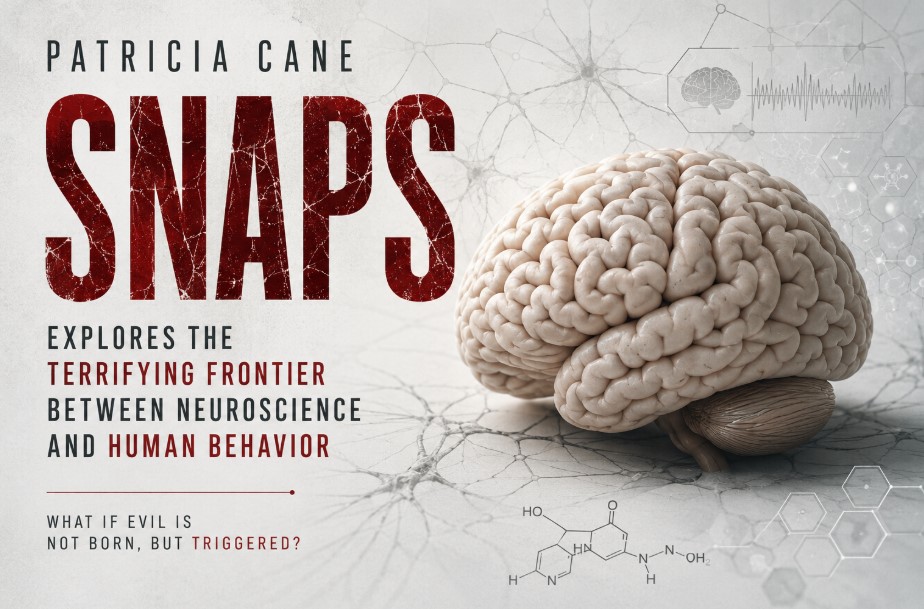
At a glance
Serotonin, and the Hidden Forces Behind Human Behavior - Interview with Patricia Cane, Author of SNAPS
For many authors, a novel begins with a carefully planned outline or a lifelong dream of becoming a writer. For Patricia Cane, however, the journey began with something much simpler: a snowy day, a computer, and a desire to stay occupied.
What emerged from that unlikely beginning was SNAPS, a suspense-driven novel that combines science, criminal law, psychology, and moral philosophy into a compelling narrative. Drawing from her own scientific background, Cane explores a provocative question: What if an otherwise ordinary person committed a violent crime because of a biological reaction beyond their control?
In this exclusive interview, Cane discusses the origins of SNAPS, the challenges of becoming a first-time author, her fascination with science, and her upcoming mystery novel, Blackberries.
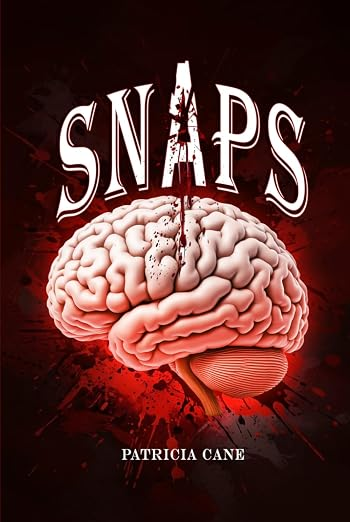
Book Details
Patricia Cane: Honestly, it started out of boredom.
It was snowing outside, and I was looking for something to do. I began writing without any grand plan or expectation that it would become a book. At first, I didn't even think the writing was very good. Eventually, I stopped working on it altogether.
About a year and a half later, I was cleaning out my computer and came across the manuscript again. I reread it and thought, "This really isn't half bad." That surprised me.
So I picked it back up and continued writing. As the story developed, I worked with a writing coach who taught me a tremendous amount about the craft. She wasn't there to flatter me. She taught me how to become a better writer.
Over time, my confidence grew. What started as a pastime became something I genuinely enjoyed. Eventually, I decided to publish the book and see where it would go.
Patricia Cane: My background is in science, and I had been reading about serotonin.
At some point, I came up with the acronym SNAPS, which stands for Serotonin Neurotransmitter Activation Protein Syndrome. That idea became the foundation for the entire story.
The interesting thing is that I don't really plan stories. I can't sit down and create a detailed outline. Instead, I start writing, and the story reveals itself as I go.
Characters appear. Situations emerge. The narrative develops naturally.
That's how SNAPS was created.
Patricia Cane: The central character is Jameson, a scientist.
Since I spent part of my own career working in laboratory environments, I was comfortable writing about scientific research and investigative work.
Jameson begins by studying serotonin and its effects through animal research. As the story progresses, he starts receiving calls from people whose friends or family members have committed violent crimes while taking antidepressant medications.
Initially, he dismisses the connection because his work focuses on laboratory animals, not humans. But as more cases appear, he notices a pattern.
The individuals involved all seem to share one thing in common.
They're taking the same medication.
That discovery pushes Jameson into a much larger investigation involving science, criminal justice, pharmaceutical companies, and questions about personal responsibility.
Patricia Cane: I don't know that I would call it a message-driven novel.
If there's a central idea, it's that ordinary people may not always be entirely responsible for changes in their behavior.
We tend to assume violent people are simply bad people. We assume they're fundamentally different from everyone else.
But what if that's not always true?
What if biology, chemistry, or medication can temporarily alter a person's mental state?
What if an otherwise normal individual commits a terrible act because something external disrupted their thinking?
Those are the questions the novel explores.
Patricia Cane: Very much so.
One of the things I found fascinating was the intersection between biology and criminal responsibility.
If a prescription medication causes a temporary state of aggression or impaired judgment, how should society respond?
Suppose someone commits a murder while experiencing a medically induced mental disturbance.
Should they be punished exactly the same way as someone who planned a crime deliberately?
Should the legal system consider the role of the medication?
Should the pharmaceutical company bear some responsibility?
Those questions don't have easy answers, but they make for interesting fiction and interesting discussion.
Patricia Cane: The scientific portions certainly were.
I've worked in laboratory settings, so I understand that environment and the people who work in it.
That knowledge helped me create Jameson's world and make the science feel authentic.
Beyond that, most of the story is fictional.
Patricia Cane: Confidence.
Without question.
I didn't believe I could write a novel.
That was the biggest obstacle.
The writing itself wasn't particularly difficult once I started. The challenge was convincing myself that I was capable of doing it.
When I reread my early drafts and realized they had potential, my confidence slowly improved.
From there, it became easier to continue.
Patricia Cane: I think it's the combination of science, law, and morality.
Most crime novels focus on solving a murder.
SNAPS asks a different question.
What happens if the person who committed the crime isn't entirely responsible for their actions?
The novel explores biological causes of aggression, legal accountability, and the possibility that the true villain may not be the person who pulled the trigger.
That perspective creates a different kind of suspense.
Readers aren't simply asking, "Who committed the crime?"
They're asking, "Who is truly responsible?"
Patricia Cane: First and foremost, I hope they enjoy it.
I wanted to write a fast-moving novel that keeps readers turning pages.
The book isn't especially long. It's around 225 pages, and it moves quickly.
I've never wanted to write an 800-page novel filled with details that don't advance the story.
I want readers to reach the end of a chapter and immediately want to read the next one.
For me, that's suspense.
The best compliment a writer can receive is hearing that someone couldn't put the book down.
Patricia Cane: Absolutely.
The new book is called Blackberries.
I live in Oregon, where blackberry bushes grow everywhere. They're thick, wild, and nearly impossible to eliminate.
One day I was looking at those blackberry thickets and thought, "That would be a perfect place to hide a body."
That's where the story began.
The novel follows two twelve-year-old boys who discover what appears to be a human skull hidden within a dense blackberry patch.
Their discovery leads to a murder investigation involving unidentified remains, DNA analysis, forensic science, and a field many readers have probably never encountered: forensic botany.
What fascinates me about the story is how plants, pollen, soil, and environmental evidence can help solve crimes.
Most people are familiar with forensic science, but few realize that botanists can play a critical role in criminal investigations.
I think readers will find that aspect particularly interesting.
Patricia Cane: Find people who will give you honest feedback.
Not people who simply tell you your work is wonderful.
Find editors, coaches, or experienced readers who will tell you what works and what doesn't.
My writing coach taught me to think beyond plot. She encouraged me to consider setting, atmosphere, character thoughts, and the details that allow readers to visualize a scene.
That changed everything.
I also recommend reading widely.
But don't just read for entertainment.
Study how other writers create tension. Study how they build scenes. Ask yourself why certain passages keep your attention.
Once you begin writing seriously, you'll never read books the same way again.
Final Thoughts
Patricia Cane's path to publication may have begun with a snowstorm and a moment of boredom, but SNAPS reveals a writer deeply interested in the complexities of human behavior and the uneasy intersection between science and justice.
Whether readers are drawn to courtroom drama, psychological suspense, scientific intrigue, or philosophical questions about free will and responsibility, SNAPS offers a distinctive perspective rarely explored in contemporary thriller fiction.
And if Cane's early descriptions of Blackberries are any indication, her next mystery may lead readers even deeper into the fascinating territory where science and storytelling collide.
Source: Exclusive interview with Patricia Cane, author of SNAPS
Publisher: Independently Published
Publication Date: May 18, 2026
Contributor
I’m Luke Leslie, a Senior Business Consultant at Author Publishing Experts. I help authors navigate the publishing industry and turn their ideas into successful books and brands. I’m passionate about building strong author relationships and creating meaningful publishing opportunities.
View all articles →More from Author



The Daily Brief
Get the day's most important stories, handpicked by our editors, delivered to your inbox every morning.
No spam. Unsubscribe anytime.