


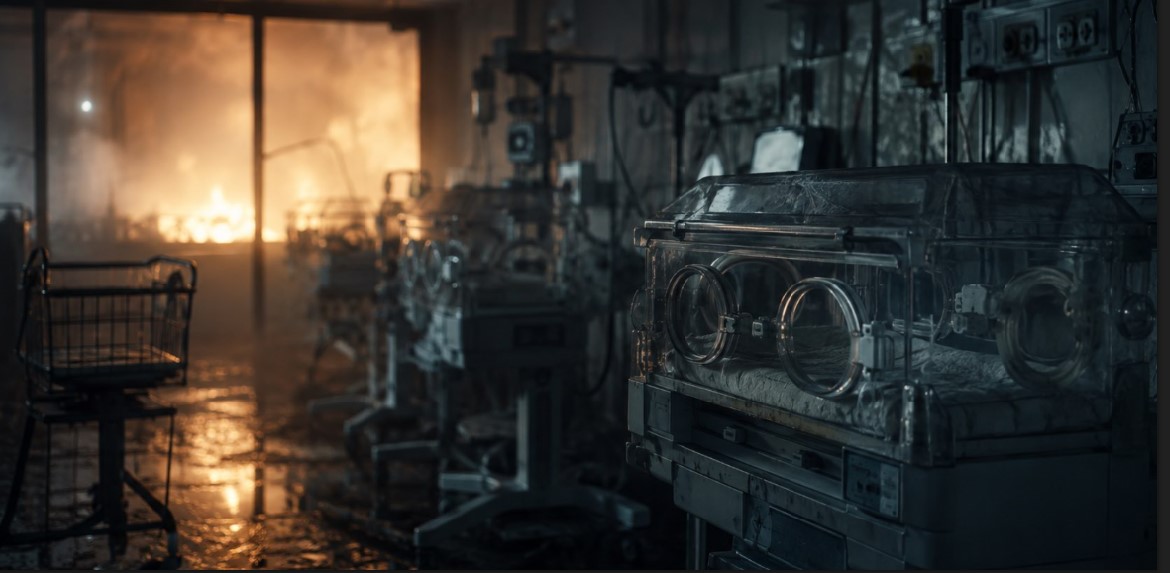
The catastrophic fire at the Pakistan Institute of Medical Sciences (PIMS) resulting in the death of 14 newborns exposed a lethal intersection of aging infrastructure and systemic administrative neglect. Investigations currently pivot on the explosion of a faulty air‑conditioning compressor, which ignited a flash‑fire intensified by high‑concentration oxygen environments essential for neonatal care. This tragedy underscores a broader crisis in Pakistani public health infrastructure where safety codes are historically marginalized by budget constraints and lack of oversight.
Combustion in the Capital
The Ignition Sequence
On the morning of Wednesday, August 26, 2026, the silence of the third‑floor Mother and Child Health ward at PIMS was shattered by a compressor explosion. Initial reports from rescue officials indicate the fire ignited approximately at 6:45 a.m. local time, originating within a malfunctioning air‑conditioning unit. Witnesses described a rapid escalation as smoke filled the neonatal nursery, leaving staff with almost no window for intervention.
The speed of the blaze was exacerbated by the physical environment of the nursery itself. Health Minister Mustafa Kamal confirmed that the presence of numerous oxygen canisters and incubators created an accelerant‑rich atmosphere. Within minutes, the intense heat and toxic fumes overwhelmed the 15 infants present, 14 of whom perished before they could be evacuated from their cradles.
The Survival Margin
In a singular, harrowing exception, one newborn was rescued from the inferno by a doctor who braved the thickening smoke. This sole survivor was rushed from the ward as fire teams began the grueling task of cooling the facility. The survival of only one child out of fifteen has raised pointed questions regarding the evacuation protocols and the immediate response of the medical staff on duty.
Grieving families, some of whom had only welcomed their children days or hours prior, were met with scenes of chaos. Sardar Atti ur Rehman, whose wife and newborn daughter were in the ward, described a desperate search through the smog. While his family eventually escaped through a window, the general lack of a coordinated exit strategy forced many mothers to descend ladders or climb through broken windows to safety.
The Architecture of Neglect
Barricaded Exit Points
One of the most damning allegations emerging from the investigation involves the physical accessibility of the nursery. Family members and some witnesses claimed that the doors to the neonatal ward were locked at the time of the fire. Hospital Executive Director Rana Sikander countered these claims, stating that doors are kept closed to prevent infant abductions—a persistent security concern in public hospitals—but were supposed to be manned.
Regardless of the intent, the result was a bottleneck that proved fatal. Firefighters reported difficulty reaching the third floor, eventually having to break through external walls to access the nursery. This delay, coupled with the lack of an internal automated sprinkler system, allowed the fire to consume the nursery entirely while leaving the rest of the hospital structure relatively intact.
Administrative Fallout
The political response was swift as Prime Minister Shehbaz Sharif ordered an immediate inquiry and vowed "strictest action" against those found responsible. In a move reflecting the severity of the institutional failure, Health Secretary Aslam Ghauri was removed from his post shortly after the incident. A multiagency fact‑finding committee, led by retired federal secretary Shahid Khan, is now tasked with delivering a comprehensive report on the safety violations.
The incident has sparked nationwide outrage, with civil society groups holding vigils and demanding accountability beyond mere dismissals. Critics argue that PIMS, as the largest state hospital in Islamabad, should have set the standard for fire safety. Instead, it has become a symbol of the "oxygen trap"—a common vulnerability in Pakistani hospitals where high‑pressure gas systems meet substandard electrical maintenance.
Conclusion
The PIMS nursery fire is not an isolated event but a recurring symptom of a healthcare system operating on the brink of collapse. The lethal combination of faulty electrical units, high oxygen concentrations, and inadequate fire escapes created a scenario where tragedy was inevitable. Until the government moves beyond reactive probes and implements rigorous, independent safety audits across all public facilities, the most vulnerable citizens will continue to pay the ultimate price for institutional negligence.
Strategic Ledger: PIMS Investigation Data Points
| Parameter | Verified Data / Status | Reference Agency |
|---|---|---|
| Casualty Count | 14 Newborns Deceased; 1 Survivor | PIMS Administration / Health Ministry |
| Initial Cause | A/C Compressor Explosion (Electrical Fault) | Islamabad Fire Dept / ICT Administration |
| Inquiry Leadership | Retired Federal Secretary Shahid Khan | Prime Minister’s Office |
| Disciplinary Action | Removal of Health Secretary Aslam Ghauri | Federal Government of Pakistan |
| Facility Location | MCH Ward (3rd Floor), PIMS, Islamabad | Hospital Records |
| Report Timeline | Urgent (48 Hours) / Comprehensive (5 Days) | Fact‑Finding Committee |
External Sources
- Vigil held in Pakistan for 14 newborns as investigators probe cause of fatal hospital fire — Washington Post
- At least 14 newborn babies die in fire at Pakistan hospital's maternity ward — The Guardian
- Fire tears through hospital nursery in Islamabad, Pakistan, killing 14 newborns — CBS News
- 14 infants killed in fire at Pims' gynae ward in Islamabad — Dawn